Wednesday, July 18, 2018

Promosi terkini

Salam Sejahtera semua.

Lama sungguh kami tak update laman ini. Kebanyakan interkasi kami dengan pelanggan hanyalah melalui laman Facebook dan juga Whatsapp.

Kami ini kami ingin mengumumkan mengenai promosi terkini Examo.


Pek ini berharga RM129, tapi kini pada harga promosi RM120 sahaja.

Hubungi kami di sini untuk keterangan lanjut atau pemesanan: Klik Sini


Sunday, April 7, 2013

Timeline penghantaran Examo


Sila klik gambar untuk melihat yang lebih besar.

Sunday, March 3, 2013

Dropship Salindah dan Examo


www.salindah.com dan www.examo.biz akan memulakan program dropship dalam masa terdekat ini. Sekiranya anda berminat, sila isi borang di sini.

Sunday, February 5, 2012

Examo memenangi hadiah pertama di One District One Industry Showcase 2008


Enhancing inteligence, concentration with Examo.

"When it comes to brain, nothing compared to Examo-CKM 500" - Words that aptly describe the achievement of Examo-CKM 500 after 30 year in the market, it certainly has contributed to the enrichment and development of the minds of Malaysians.

Formulated by Prof Dr Azizan Ismail, the inaugural product of Era Edar Marketing Sdn. Bhd. (EEM), has won first prize under the health product category for One District One Industry Showcase 2008, organized by ministry of Entrepreneur and Co-operative Development and held at the Melaka International Trade Centre.

“This is the first time our product enters such a competition after considering the suggestion from Director of Mara Kedah, Ahmad Rakhli Hassan. We did not expect to win at all,” said the EEM general manager, Prof Dr Hamsiah Ismail.

EEM received a cash prize of RM5000 and certificate of participation. Dr Hamsiah said the winning was an acknowledgement of the quality of Exmo-CKM 500 and inspires EEM to increase production for betterment of the minds of Malaysians.

The product is made of minerals (BTS) and produced by EEM in their factory, Darulaman Homeopathic Laboratories (M) Sdn Bhd, the first Homeopathy in Malaysia and Southeast Asia.

Dr Hamsiah said Examo-CKM 500 helps to enrich mind, strengthens memory, enhances the ability to think, helps attain peace of mind, sharpens focus and encourages diligence and aspiration to learn.

Thus, it is suitable not only for student but also for young children, adults and old folks.

Examo-CKM 500 can help students overcome their typical problems such as forgetfulness, lack of focus, sluggishness, laziness, bored, tiredness, depression and hyperactivity.

“These problems are caused by the pressure of learning and facing tests and examinations. The stress can cause bigger problems for the students such as migraine."

“The same goes for those who are working. Work environment, job overload and issues concerning quality of work can cause stress and influence the quality of our work."

“Dedicated workers and students are always in state of balance in terms of physical, mental, emotional and spiritual. Examo-CKM 500 should be consumed as a daily supplement as it reduces stress and fatigue and end enhance our mental energy,” she said.

According to Dr Hamsiah, nursing mothers and pregnant ladies should also consume Examo-CKM 500 as the product can supply nutrients required by their bodies and increase levels of blood to avoid anemia and fatigue.

She explained further, “Examo CKM 500 supplies calcium needed by pregnant ladies for the development of the baby’s brain and spinal cord."

“The consumption of Examo CKM-500 during pregnancy and nursing can help enhance the brain development of children as the growth peaks from the fifth until 20th week. After birth, a baby’s brain becomes active until about a year old."

“By the age of three, a child’s brain becomes more active and flexible. At this stage, a child needs more stimulation to hear, see, taste, smell and touch. Insufficient stimulation weakens and kills brain cells."

“At this stage, we can also identify any abnormalities in children which are caused by nerve problem such as slow in learning to talk, stutter, Down’s syndrome and meningitis.”

"Therefore, parents should be aware of their children’s development from pregnancy until their birth."

"The intake of Examo CKM 500 by mothers-to-be, nursing mothers and children can help enrich the brain development and increase mental capabilities."

"Old folk would also benefit from Examo-CKM 500 as it helps prevent mind-related problems such as dementia, paralysis, syndromes of Parkinson’s and Alzheimer, which always inflict the golden age."

“These problems arise because nerves in the brain can no longer function properly and die eventually. Apart from that, when we age, our brain functions decrease and weaken especially in the parts that stores information."

“Consumption of Examo-CKM 500 maintains the nerves that help store information in the brain. Examo-CKM 500 supplies a balance diet for the growth and development of our minds. Just like our bodies require food energy and health, Examo-CKM 500 is the sustenance for our minds.”

Dr Hamsiah said since Examo-CKM 500 entered the market in 1978, thousands of Malaysians have consumed and benefited from it. In fact, some have made Examo-Ckm 500 part of their family’s daily routine and passed it from generations to generations.

She also said, that the public not worry about using Examo-CKM 500 because it is not a drug, but a supplement made of minerals that supplies balanced nutrient required by humans. Thus, it does not have any side effects or poison, and does not caused addiction to its users.

Friday, April 8, 2011

Letter from Fukushima


Letter from Fukushima: A Vietnamese-Japanese Police Officer’s Account
New America Media, First Person, Ha Minh Thanh, Posted: Mar 19, 2011

Editor’s note: This letter, written by a Vietnamese immigrant working in Fukishima as a policeman to a friend in Vietnam, has been circulating on Facebook among the Vietnamese diaspora. It is an extraordinary testimony to the strength and dignity of the Japanese spirit, and an interesting slice of life near the epicenter of Japan’s current crisis, the Fukushima nuclear power plant. It was translated by NAM editor, Andrew Lam, author of East Eats West: Writing in Two Hemispheres. His first book, Perfume Dreams, Reflections on the Vietnamese DIaspora won a 2006 Pen Award.


Brother,

How are you and your family? These last few days, everything was in chaos. When I close my eyes, I see dead bodies. When I open my eyes, I also see dead bodies. Each one of us must work 20 hours a day, yet I wish there were 48 hours in the day, so that we could continue helping and rescuing folks.

We are without water and electricity, and food rations are near zero. We barely manage to move refugees before there are new orders to move them elsewhere.

I am currently in Fukushima, about 25 kilometers away from the nuclear power plant. I have so much to tell you that if I could write it all down, it would surely turn into a novel about human relationships and behaviors during times of crisis.

The other day I ran into a Vietnamese-American. His name is Toan. He is an engineer working at the Fukushima 1 nuclear plant, and he was wounded right at the beginning, when the earthquake struck. With the chaos that ensued, no one helped him communicate with his family. When I ran into him I contacted the US embassy, and I have to admit that I admire the Americans’ swift action: They sent a helicopter immediately to the hospital and took him to their military base.

But the foreign students from Vietnam are not so lucky. I still haven't received news of them. If there were exact names and addresses of where they work and so on, it would be easier to discover their fate. In Japan, the police do not keep accurate residential information the way they do in Vietnam, and privacy law here makes it even more difficult to find.

I met a Japanese woman who was working with seven Vietnamese women, all here as foreign students. Their work place is only 3 kilometers from the ocean and she said that they don’t really understand Japanese. When she fled, the students followed her, but when she checked back they were gone. Now she doesn't know if they managed to survive. She remembers one woman’s name: Nguyen thi Huyen (or Hien).

No representatives from the Vietnamese embassy have shown up, even though on the Vietnamese Internet news sites they claim to be very concerned about Vietnamese citizens in Japan - all of it a lie.

Even us policemen are going hungry and thirsty, so can you imagine what those Vietnamese foreign students are going through? The worst things here right now are the cold, the hunger and thirst, the lack of water and electricity.

People here remain calm - their sense of dignity and proper behavior are very good - so things aren’t as bad as they could be. But given another week, I can’t guarantee that things won't get to a point where we can no longer provide proper protection and order. They are humans after all, and when hunger and thirst override dignity, well, they will do whatever they have to do. The government is trying to provide air supply, bringing in food and medicine, but it’s like dropping a little salt into the ocean.

Brother, there are so many stories I want to tell you - so many, that I don’t know how to write them all. But there was a really moving incident. It involves a little Japanese boy who taught an adult like me a lesson on how to behave like a human being:

Last night, I was sent to a little grammar school to help a charity organization distribute food to the refugees. It was a long line that snaked this way and that and I saw a little boy around 9 years old. He was wearing a t-shirt and a pair of shorts.

It was getting very cold and the boy was at the very end of the line. I was worried that by the time his turn came there wouldn’t be any food left. So I spoke to him.

He said he was in the middle of PE at school when the earthquake happened. His father worked nearby and was driving to the school. The boy was on the third floor balcony when he saw the tsunami sweep his father’s car away. I asked him about his mother. He said his house is right by the beach and that his mother and little sister probably didn’t make it. He turned his head and wiped his tears when I asked about his relatives.

The boy was shivering so I took off my police jacket and put it on him. That’s when my bag of food ration fell out. I picked it up and gave it to him. “When it comes to your turn, they might run out of food. So here’s my portion. I already ate. Why don’t you eat it.”

The boy took my food and bowed. I thought he would eat it right away, but he didn't. He took the bag of food, went up to where the line ended and put it where all the food was waiting to be distributed. I was shocked. I asked him why he didn’t eat it and instead added it to the food pile …

He answered: “Because I see a lot more people hungrier than I am. If I put it there, then they will distribute the food equally.”

When I heard that I turned away so that people wouldn't see me cry. It was so moving -- a powerful lesson on sacrifice and giving. Who knew a 9-year-old in third grade could teach me a lesson on how to be a human being at a time of such great suffering? A society that can produce a 9- year-old who understands the concept of sacrifice for the greater good must be a great society, a great people.

It reminds me of a phrase that I once learned in school, a capitalist theory from the old man, Fuwa [Tetsuzo], chairman of the Japanese Communist Party: “If Marx comes back to life, he will have to add a phrase to his book, Capital, and that ‘Communist ideology is only successful in Japan.’”

Well, a few lines to send you and your family my warm wishes. The hours of my shift have begun again.

- Ha Minh Thanh
http://newamericamedia.org/2011/03/letter-from-fukushima-a-vietnamese-japanese-police-officers-account.php

Sunday, February 20, 2011

Mediocre students becoming doctors


EVERYONE knew she was a mediocre student, yet Lina (not her real name) was bent on pursuing a career in medicine.

Armed with her not so spectacular Sijil Pelajaran Malaysia results of weak credits in Biology, Chemistry, and a pass in Physics and Additional Maths, she applied to do medicine in several of the local public and private universities.

Her applications were rejected. But Lina was determined to be a doctor.

On her insistence, her family enrolled her at a local medical college which offered preparatory courses to do medicine in several South Asian and East Asian countries.

Despite acknowledging that her results were not up to the mark, the college took her in as a student and made her re-sit her SPM science subjects.

Within seven months, she completed her pre-medical course and Lina is now pursuing her first year of medical studies in a relatively unknown university in Bangladesh.

Stories like Lina's are not isolated. The pathway to that "elusive" medical degree seems to be getting easier, even for those who don't meet the standards.

Over the last 10 years, Malaysia has seen a mushrooming of private medical colleges to meet the increasing number of high-achieving school leavers who fail to secure the limited medical seats available in our public universities.

At last count, there were 26 public and private universities and colleges offering medical degrees.

While the majority of these universities and colleges impose strict entry requirements, including having distinctions or strong credits in Science subjects at A-Levels, some are a little more accommodating in their pre-entry qualifications.

Many of the smaller colleges offer foundation courses in medicine for those who do not have the minimum entry requirement of strong credits in Science subjects and Mathematics. Students from these colleges go on to pursue a medical degree in lesser known foreign universities, usually in Asia and eastern Europe.

What worries the medical fraternity, and Malaysians in general, is the quality of doctors the less established medical colleges are churning out.

As Malaysian Medical Association (MMA) president Dr David Quek pointed out in the December issue of the MMA Bulletin "it's not just the medical degree from 'any' university, but the prestige and the quality of the medical university or college that truly matters".

The MMA has reason to be concerned as recent reports have indicated that many housemen, including those from local universities and colleges, are so inept that they cannot perform even simple procedures that medical aides, such as nurses, can do.

Dr Quek stresses that the government's goal of trying to achieve a doctor-patient ratio of 1:400 by 2020 is "way too fast and too soon", cautioning that it won't be long before the country faces not just a glut of doctors "but also a possible erosion of standards", due to the insufficient infrastructure and training and supervising personnel to cater to the influx of medical graduates.

A doctor who has been practising for more than 20 years concurs that standards have dropped quite drastically.

"Now, some of these housemen do not even know how to insert an intravenous drip or take a patient's blood pressure or take a proper case history... and these are basics every medical student needs to know."

He adds that when pre-entry requirement standards are lowered, then the industry would eventually churn out sub-standard doctors.

He says even when he was studying in India in the 80's, he knew of students who did not make the grade but were offered seats in some lesser known medical colleges after paying huge capitation fees.

"Some of these students who entered the university a few years before me, had still not completed their studies when I graduated. Some took up to 10 years to complete their medical degree which most of us did within seven years. One wonders how competent a doctor they would be."

He says because of the large number of medical graduates and limited number of teaching hospitals, many were not gaining enough experience during their housemanship.

"As housemen, we used to work 15 to 20 hours daily and if we were on call, it could even be 36 hours. But I am all the better for it as I was able to serve in various hospitals in Kuala Lumpur, Sabah and Terengganu and gained wide clinical experience as we were expected to do everything," he adds.


Read more: Mediocre students becoming doctors http://www.nst.com.my/nst/articles//20spmd/Article/#ixzz1EVlI3uvY

Sunday, October 24, 2010

Make schools safe for teachers and students


DEPUTY Prime Minister and Education Minister Tan Sri Muhyiddin Yassin said in Parliament last week that some 1,650 of 55,000 school buildings were found to be severely damaged and required immediate attention.

Five percent of the number was found to have wiring problems.

This revelation is a matter of grave concern not only to the Education Ministry, but also to the teachers, parents and students.

What immediately comes to mind is how soon will this be rectified as the safety of teachers and the students are at stake.

Over the years a number of accidents had occurred in schools which resulted in injuries to students.

The latest incident involved SK Gunong in Kedah where a classroom floor caved in while a class was going on and 10 pupils and a teacher were injured.

According to Muhyiddin, the Government allocated RM8.85bil for his ministry to carry out development projects under the 10th Malaysia Plan. An estimated RM5.36bil would be used to continue uncompleted projects under the 9th Malaysia Plan. The balance is to construct new buildings and schools, as well as upgrading existing ones.

As such, the Government should provide a special allocation for repairs and rectification works on all affected schools in the interest of safety.

Under no circumstances must the safety of teachers and students be compromised and the “safe school” concept of the Education Ministry be put in jeopardy.

The subject of “safe schools” should not be confined only to indiscipline, crime, threats to the safety of students, bullying and gangster-like behavior etc but also to matters concerning the safety of school buildings, classrooms, equipment and all other amenities in schools.

In this regard, there is a need for schools to be aware of the existence and importance of the Occupational Safety and Health Act 1994 and its application to educational institutions.

Schools with 40 or more employees are required to set up safety and health committees.

Through safety and health training, and education as well as safety and health promotion, every school will be more aware of the potential safety and health hazards in the school. They will also be capable of dealing with any problems that arise.

Such a move will also benefit the students who can learn more about safety and health at an early age.

TAN SRI LEE LAM THYE,

Kuala Lumpur.

Saturday, October 16, 2010

Bilingual option for students and teachers


KUALA LUMPUR: All Year One pupils in national schools next year will be studying Science and Mathematics in Bahasa Malaysia.


They will not be given a choice to answer in English for school tests and public examinations as they progress through the years. Their textbooks would also be in Bahasa Malaysia, said Education director-general Tan Sri Alimuddin Mohd Dom.

Those entering Form One and Form Four next year will be given the option to study Science and Maths either in Bahasa Malaysia or English. Their textbooks, however, will be in English.

"If the students are ready to be taught in Bahasa Malaysia, then the teacher can teach the two subjects in Bahasa Malaysia. If they are not ready, then the teacher can teach in English or opt to teach in both languages.
"Through the 'soft landing' approach, the change in the medium of instruction for the teaching of Science and Maths will be done gradually to accommodate the variability in students' and teachers' readiness," Alimuddin told the New Sunday Times.

He said the process of transition will be done in stages (refer to transition table).

Alimuddin added that the switch to Bahasa Malaysia as the medium of instruction for Science and Maths would apply to national schools, whereas in SJKs (national-type schools), the switch would be to their mother tongues -- Mandarin in SJKC and Tamil in SJKT respectively.

Students entering Form Two in 2012, said Alimuddin, would be allowed to study Science and Maths in Bahasa Malaysia and English until they reach Form Five in 2015.

"Textbooks in Bahasa Malaysia will be supplied to Year One pupils beginning next year and Year Four beginning 2012 for primary schools. For the SJKC and SJKT, there will be textbooks in Mandarin and Tamil respectively.

"As for secondary schools, textbooks in Bahasa Malaysia will be supplied to Form One and Form Four students beginning 2012.

"Students are allowed to answer in English in exams during the transitional period but once the medium of instruction is completely in Bahasa Malaysia for a particular year or form, then they are required to answer in Bahasa Malaysia," said Alimuddin.

Asked whether schools will be given the option to teach the two subjects in English, Alimuddin said: "The bilingual medium of instruction is allowed only during the transitional period. Once the medium of instruction is completely Bahasa Malaysia for a particular year or form, then the only medium of instruction allowed is Bahasa Malaysia.

"By 2016, the medium of instruction for both subjects across primary and secondary schools will completely be in Bahasa Malaysia in all national schools," said Alimuddin.

He said 2013 was the last year in which the Penilaian Menengah Rendah examination would be conducted in two languages for Science and Maths, while for the Ujian Pencapaian Sekolah Rendah and Sijil Pelajaran Malaysia examinations, it would be in 2015.

On July 8, last year, Deputy Prime Minister Tan Sri Muhyiddin Yassin, who is also the education minister, announced the cabinet's decision to reverse the policy of teaching Science and Maths in English (or PPSMI).

Muhyiddin was reported to have said Science and Maths would be taught in Bahasa Malaysia and vernacular languages in stages from 2012 in line with the ministry's "Memartabatkan Bahasa Melayu, Memperkukuhkan Bahasa Inggeris -- Upholding the Malay Language, strengthening command of English" strategic move.

The reversal in policy came seven years after PPSMI was introduced by former prime minister Tun Dr Mahathir Mohamad in 2003.

Muhyiddin told Parliament in October last year that the ministry was mulling the possibility of teaching the two subjects in Bahasa Malaysia to Year One pupils next year, ahead of the initial 2012 target.


Read more: Bilingual option for students and teachers http://www.nst.com.my/nst/articles/17sain-2/Article/#ixzz12aZvgiFd

Friday, June 4, 2010

Pembayaran

Sila ke laman web kami http://www.salindah.com/pesanan.php untuk membuat pembayaran.

Terima kasih

Sunday, May 30, 2010

Harga Examo

Berikut adalah harga-harga produk Examo.

Harga di Semenanjung Malaysia dan Sabah/Sarawak adalah sama. Perbezaan harga ditanggung oleh www.examo.biz (hanya pembelian online layak mendapatnya).


Barang Harga
Examo CKM500 (guna harian) 56.00
Examo CKM500 Plus (guna mingguan) 28.00
Examo Ekonopek (CKM500 + CKM Plus) 80.00

Saturday, May 22, 2010

A teacher’s job is to teach

I HAD the privilege of being a temporary teacher at a primary school in rural Selangor, but I left feeling truly honoured to have had the experience of being a “cikgu” even if it were only for two weeks.

I am amazed at the amount of work that teachers put in to mould and mentor their young charges and totally agree that it is indeed a noble profession.

Teachers, traditionally, are supposed to teach and educate the young.

They also need to inculcate good moral values in youngsters so they can be better people.

Their focus is not only to teach. They also have to train their students for numerous sporting competitions.

This is not all, they have to single-handedly deal with the organising and preparation involved in getting the medals, gifts and certificates.

What’s more, they attend courses and meetings during school hours and at the same time have to keep up with the syllabus.

As if this isn’t enough, they are bogged down with paper work which involves the filling in of forms and writing reports about the extra-curricular activities.

Looks like the Education Ministry is trying to convert teachers into office workers!

What is the role of the school clerk then? Or have they been given other jobs?

I am told by a teacher that most of the paperwork, like the reports for the extra-curricular activities, is unnecessary and is just done for the sake of pleasing senior officials in the State Education Department and the Education Ministry.

No one actually reads them, and the documents either collect dust or are eventually thrown away. Isn’t this is a waste of time, money and resources?

Based on my observations, the teachers already have a packed schedule and countless books to mark.

They also have to prepare teaching materials before entering the class, but it is worth their effort because it is for the sake of the students.

However, the non-teaching chores take too much time and they are unable to devote enough time to teach their pupils.

Every time when there is degradation in the major exam results, the government will quickly blame a certain policy for failing to achieve its objectives, but has anyone thought that the heavy workload that teachers have to put off with might be the underlying reasons for students to be unprepared for their exams.

I have some suggestions that may be of help to reduce the paperwork that teachers are burdened with.

·Increase the number of clerks in the school as this will reduce the workload of teachers. It will increase job opportunities for those keen on clerical services.

·Train more PJK (Physical Education) teachers, so they can replace core-subject teachers and be specially in charge of training the students and bringing them to participate in the sporting competitions.

·Courses should be conducted during school holidays.

This will enable teachers to complete the syllabus and leave them with considerable time to carry out revision and extra classes for weaker students.

The government has to listen to the people. There is a Chinese proverb which says that sincere advice always sounds harsh to the ears, but it must be acted upon, if we want to see the results.

VINCENT TEH

Via e-mail
http://www.thestar.com.my/education/story.asp?file=/2010/5/23/education/6289955&sec=education

Wednesday, April 28, 2010

Dirempuh ketika melintas


PUTRAJAYA: Bunyi seretan brek disusuli dentuman kuat mengejutkan beberapa penghuni kawasan perumahan Presint 8 di sini, apabila seorang murid sekolah dilanggar sebuah kereta, petang semalam.

Sebelum kejadian, mangsa, Adibatul Husna Mohamed Rais, 10, murid tahun empat Sekolah Kebangsaan Putrajaya Presint 8 (1) dipercayai berlari melintas jalan selepas panik apabila ditinggalkan rakan, kira-kira jam 2 petang.

Bagaimanapun, sebuah kereta Perodua Myvi dipandu seorang wanita dipercayai tidak sempat membrek sebelum merempuh kanak-kanak berkenaan.


Saksi, Azman Aziz, 49, berkata, dia mendengar sebuah kereta membrek dan mendengar dentuman kuat sebelum bergegas untuk melihat punca bunyi itu. “Ketika sampai di tempat kejadian, saya melihat seorang murid perempuan terbaring di jalan raya dipercayai dilanggar kereta itu.

“Saya menghubungi anak saya yang bekerja di Perbadanan Putrajaya (PPj) sebelum memintanya melaporkan kejadian itu kepada polis dan menghubungi ambulans,” katanya ketika ditemui di tempat kejadian.

Menurutnya, mangsa yang patah tangan kiri dan luka ringan di muka dan kaki dipercayai melintas jalan ke sekolah itu dan tidak menyedari kehadiran kereta yang dipandu laju.

“Mangsa dilanggar berhampiran lintasan pejalan kaki, namun dia tidak menggunakan lintasan berkenaan ketika melintas.

“Sekolah itu tidak mempunyai pengawal lalu lintas dan mengundang bahaya kerana murid sekolah rendah tidak pandai mengagak kelajuan kenderaan,” katanya.

Adibatul Husna dihantar ke Hospital Putrajaya oleh ambulans bagi menerima rawatan.

Sementara itu, jurucakap polis Bahagian Trafik Ibu Pejabat Polis Putrajaya ketika dihubungi mengesahkan kejadian itu yang membabitkan sebuah kenderaan dipandu seorang wanita yang bekerja di Presint 8.

Menurutnya, wanita terbabit sudah membuat laporan kejadian itu, manakala sehingga kini, polis belum menerima sebarang laporan daripada keluarga mangsa.

Oleh Syarifah Dayana Syed Bakri
2010/04/29
http://www.hmetro.com.my/myMetro/articles/Dirempuhketikamelintas/Article

Televisyen punca pengaruh negatif


KUALA LUMPUR - Tabiat menonton televisyen didakwa menjadi punca utama berlakunya obesiti dalam kalangan orang dewasa dan kanak-kanak selain pembawa kesan negatif yang boleh mempengaruhi minda kanak-kanak.

Pengarah Komunikasi Kumpulan Persatuan Pengguna Malaysia (Fomca), Mohd Yusof Abdul Rahman berkata, menonton televisyen secara berlebihan mewujudkan gaya hidup menyendiri dan tidak banyak terlibat dalam aktiviti fizikal selain menyebabkan obesiti.

Atas dasar itu, Fomca melancarkan Kempen Minggu Tidak Menonton Televisyen yang bermula pada 21 hingga 27 April lalu bertujuan membantu mewujudkan kesedaran bahawa masa menonton televisyen perlu dihadkan kepada kurang dua jam sehari.

“Menurut kajian, golongan muda dan kanak-kanak menghabiskan masa antara empat hingga enam jam sehari menonton televisyen berbanding melakukan aktiviti fizikal.

“Jadi, melalui kempen ini kami berharap ibu bapa menyedari bahawa anak tidak boleh terlalu leka menonton televisyen terutama bagi mereka yang berumur dua tahun ke bawah.

"Ini kerana faktor persekitaran dan pengaruh yang dibawa oleh rancangan di televisyen itu sendiri,” katanya pada Sinar Harian pada Program Analisis Kempen Tidak Menonton Televisyen di Tabika Kemas Kem Batu Kentonmen.

Beliau berkata, kempen tersebut dianggap berjaya setelah menerima komen daripada ibu bapa memandangkan sepanjang seminggu kempen, mereka lebih banyak meluangkan masa dan membawa anak menjalani aktiviti riadah sekali gus mengeratkan hubungan terutamanya bagi mereka yang sibuk bekerja.

“Kita dapat reaksi positif daripada ibu bapa, ada yang mengatakan sepanjang mempraktikkan minggu kempen tidak menonton televisyen, mereka lebih mengenali anak mereka kerana ada yang meluahkan perasaan dan masalah.

“Fomca ada memberi buku laporan untuk dicatatkan mengenai aktiviti yang dilakukan bersama -anak dan beberapa cadangan aktiviti alternatif yang boleh dilakukan seperti membawa anak ke Zoo Negara, pergi ke perpustakaan, menolong ibu bapa dan aktiviti riadah lain.

“Kempen ini mendapat sambutan daripada ibu bapa berdasarkan laporan yang dicatatkan,” katanya.

http://www.sinarharian.com.my/selangor/content/story7622137.asp

Monday, April 26, 2010

Kisah sedih


Losing a child is every parents nightmare.
Never across in my mind that one day my child will die before me.

NEVER.

And it happens to me, in split second, he left me forever. Without any
warning, without saying goodbye and never in my mind, it would be this way.

I love him so much.

I miss him so much.

Only ALLAH knows how I feel now, but I must be redha. Ini ketentuan Allah.
No one can stop it. *NO ONE *. Sudah tertulis, ajal Dzafri sudah tiba pada
20hb Mac 2010, pukul 8.50pm. Semuanya sudah tertulis.

My second son, DZAFRI HISYAM BIN KHAIRULANWAR, passed away peacefully on 20
March 2010 at 8.50pm, at ICU/NICU Ampang Puteri and he was 15 months old
(born on 22 September 2008).

He was first diagnosed with dengue (the diagnosed and confirmation of the
dengue was made by our regular pediatrician at Wangsa Maju) and later
transferred to Ampang Puteri on 20 March 2010 (Saturday) because Dzafri had
trouble breathing and the first hospital doesnt have the proper equipment.

The minute we arrived at Ampang Puteri by ambulance, the consultant
pediatrician at the ICU/NICU ward have said this to me, "Your baby is too
sick. What happened? I cannot promise you anything.... "

WHAT?

What?????? Said that again????

But still in my head, I thought to myself that this doctor is wrong. Ya, me,
without any medical background, wants to tell to this experience doctor that
he is wrong. And he continue, "I think this is not dengue, this is something
else. He is too pale. Do he have talasemia?" I quickly replied to him, "No.
What do you mean by something else. The doctor (referring to the earlier
pediatrician) told me it was dengue." "Never mind. I will do the test
first." He replied.

I kept quiet to myself, not saying anything and just let the doctor and his
nurses doing their job. I was with Dzafri in that ICU room, waiting for my
husband and Dzarif as I arrived earlier with the ambulance. Still in shock
of what the doctor told me, but I still remaining calm. Tapi dalam hati, Ya
Allah, Tuhan saja tahu. I just want to scream, yell, cry ... and all I want
to do at that time is Dzafri to be ok and we can all go home.

Dzafri was put on oxygen, drip, wayar sana sini-at his chest, hand, his
little feet .... He starts to merengek, maybe because tak selesa dgn
wayar-wayar yang banyak tu. He didnt cried, but he wants me to hold him
tight. Tapi macam mana nak dukung him with all the wayar, dari hidung,
lengan, tgn, kaki semuanya ada. I tried to make him comfortable as I could,
but I know, he's scared. Me too..

After 1/2 hour in the ward, Dzafri tertidur and I quickly make my way to the
registration counter as hubby is stuck in the traffic jammed. habis urusan
di kaunter tu, I quickly ran back to the ward and there, the doctor is
waiting for me to show Dzafri chest Xray.

"Its pneumonia. Its getting worst. What actually the doctor told you?"

I explained to him the whole thing, from the first day Dzafri had his demam
which is on Monday night, we went to see his pediatrician on Wednesday and
was admitted on Friday because the doctor suspected dengue or viral fever,
and which the blood test done on Friday and Saturday with the platlet count
drop to 28, the pediatrician confirmed it was dengue but, Dzafri had trouble
breathing since Wednesday and the pediatrician told me its only phlegm and
something to do with Croup bacteria/virus.

"No. This is nothing to do with dengue or viral fever. Its pneumonia and his
chest Xray shows that his right lung is filled with pus ? (nanah) and he
need to be operate immediately" .

I was nearly fainted.

My hubby was outside at the visitor lounge, waiting with Dzarif, because kid
under 12 are not allowed to be in the ICU ward and we had nobody to look
after him. I agreed with the operation thing and quickly ran to my husband,
asked him to see the doctor and explained to him once more. Just before
that, another doctor came into the room. The nurse introduced him as the
Pakar Bedah Paru-paru. He was holding the chest xray and was saying
something to the first doctor. Then, he explained to me. This time, his
words really make me want to cry.

"Its pneumonia but I ternampak satu benda asing dalam paru-paru dia ni.. I
rasa ada ketumbuhan. Growth."

"Growth?"

"Tumor"

YA ALLAH!!!

At that time, I am really confused. Sad. The reason the whole transfer thing
from the previous hospital to Ampang Puteri is because he has trouble
breathing and the doctor there confirmed that it was dengue.

How can from dengue be a tumor?

He never sick before. Only demam, selsema like the rest of other kids. Bagi
ubat, dia baik. Tidak pernah pun dia terbaring lama, kesakitan. Never. He
never get sick before. I really dont understand.

"Your doctor tak pernah instruct for Xray?" Asked the surgeon again.

"No. And I pun tak pernah terfikir nak hantar dia for Xray coz dia tak
pernah sakit".

"Its not your fault. The doctor should advise you. We need to sent him for
scan. Then baru I betul-betul boleh confirm whether its tumor or something
else. But from my experience, its tumor and maybe dah lama kat sini, maybe
since birth. Pneumonia is because of the tumor. I cuma boleh tahu the size,
berapa lama and what kind of tumor after the scan. Then baru I boleh buat
surgery."

Again, I just kept quiet, trying very hard to understand all this. Dzafri
starts merengek balik, and this time, I started to cry. I asked the doctor
to discuss it with my husband. I went to get him, again, I have to wait with
Dzarif at the visitor lounge. Only few minutes inside the ward, he came to
get me, saying that Dzafri is crying and looking for me.

I quickly ran to get him, seeing that the nurses try to pujuk him but he's
still crying and mengamuk rimas because of the wayar. The nurses prepared
him to sleep, as before can get into the scan, he must sleep.

With the help of the nurses, I tried to give him the ubat tidur. Its a sweet
syrup, but my poor boy refused to take it. Its not like normal Dzafri who
loved to eat, drink, even ubat. Since Wednesday, his selera makan kurang and
starts on Friday, he refused to drink, eat and even takes his milk. Its so
sad bila mengenangkan, yang dia memang suka makan, but dia akhir hayat dia,
he cant eat.... maybe because sakit yang ditanggung .... I dont know. I
really dont. Sampai sekarang, everytime I ate, I must remember him, because
he is my partner when makan time. He will walk towards me or starts mumbling
when he saw his plate or my plate or any foods in my hand.......

Even though the portion of the ubat given to him suitable for his age and
weight, he still cant sleep. He start merengek again, pulling all the wayar,
tried to sit on the bed and he looked at me with his sad eyes, asking me to
hold him. The nurses help me with the wayar, and I hold him tight, tried to
put him to sleep. Because if he cant sleep, they cant put him into the scan
machine. Still, he cant sleep after holding him for almost 15 minutes. The
nurse put him to IV, with hope that he will sleep, but no .... He merengek
lagi kuat, pulling all the wayar, pusing sana sini, wants me to hold him
....... I tried to calm him down, pujuk dia, berzikir, and looks like he wants
to sleep ..... but I was wrong.

It was 8.35pm.

He starts to tersentak-sentak, like kena fit. I thought its fit because dia
pernah kena fit on 4 November 2009 and 1 February 2010. I yelled to the
nurse, saying that dia kena fit, but the nurse reply to me ....

"Ni bukan fit kak"

Before she could finish her sentence, she quickly called out all of the
nurses in the ICU/NICU ward and the doctors. Just a split second, there is
about 7, 8 nurses in the room and one of them had asked me to leave the
room. That minute I know something terrible happened.

I was crying , more into menjerit, meraung, asking the nurses what's going
on. 2 of them tried to calm me down, asked me to sit on the chair as I
nearly collapsed. I tak sedar, my husband were there with Dzarif. I couldnt
say anthing, only sat there and cried. Dzarif come to me and hug me, saying
to me not to cry. I even cry loud, saying that I am sad because adik sick.

My husband were asking me what had happened as he spent most of the time at
the visitor lounge because he cant be with Dzafri in the ward because need
to take care Dzarif. I told him what had happened. Dia terkejut, quickly
berdoa for Dzafri and asked me to do the same.

Then, the doctor came and see my husband.

"I cannot promise you anything. I think there's no hope, but I will try my
best."

My husband can only said, Ya Allah.

I cried.

And only after 2 minutes, the doctor came to us again.

I cant barely hear what he's saying but my husband came to me.

Hug me and kiss me.

"Dzafri dah tak ada, yang. Ya Allah."

And it was 8.50pm.

I still sit on the chair, crying like I never cried before.

Screaming.

My husband went into the room. I was still outside, this time I was sitting
on the floor, making calls to my family and friends.

I cant walked to the room. I have no strength to do that. I just cant. I
couldnt face this. My son is gone.

I am so sad. I could not explained more. No words can described it.

It felt like my chest just being stabbed.

Ya Allah. Beratnya dugaan yang Kau berikan kali ini.

After I have called my friends, Maria and Zul, called my aunties, my
brother. Then I called my mom. The minute I told her that Dzafri had passed
away, my dad pengsan. Ya Allah, Ya Tuhanku. Berilah aku kekuatan. Then I
called my mom again to make sure that she and my dad are ok. Luckily, my
aunty just stayed near there and a cousin had offered to drive my parent
from Kluang, Johor to KL that night.

Then, I slowly walked to Dzafri room.

There he was, lying on the bed.

I cant hear his voice again.

No 'mama' to greet me.

No chicky smile to welcome me.

No bye bye hand from him.

He just lying there.

He's gone. Forever.

I held him tight. Crying, screaming his name. Saying No. I dont why, but I
said "No, Dzafri. No."

I dont know how long i cried, screaming his name.

Then, I sat. I was tired.

I asked the nurses, "Betul ke dik dia dah tak ada".

The nurse looked at me, "Betul kak. Dia dah tak ada."

I repeatedly asked her the same question. And she reply me with the same
answer.

My Dzafri is no longer with me.

I miss him. Today (1 April 2010) is the 12th day since he passed away.

But I can still hear his voice.

I can still hear his cries.

I can still remember his laughter.

I can still smells him.

And I still remember his smile.

*
Ya Allah, aku redha dgn ketentuanMu. Berilah aku semangat dan kekuatan dalam
menempuh dugaan Mu yang besar dan berat ini, Ya Allah. Sesungguhnya, Kau
Maha Pengasih, Maha Pengampun. Segala-gala yang terjadi adalah kehendak mu
Ya Allah dan aku sebagai hambaMu, redha dengan segalanya. Tempatkanlah
Dzafri di sisi M,u di kalangan orang beriman, di syurga Mu. Kau temukanlah
kami bersamanya di syurga Mu, Ya Allah. - Amin. *

*Dzafri, *

*Mummy love you so much. I am going to miss you forever. Not only me, ayah,
abang, totok, grandma, uncle adik, auntie mek, and all of us will missing
you dearly. I love you dear. No words can described how much I miss you
right now. I love you dear. I have to let you go. But I'm going to miss you
forever and my love will never fade. You are my only DZAFRI.

Saturday, April 24, 2010

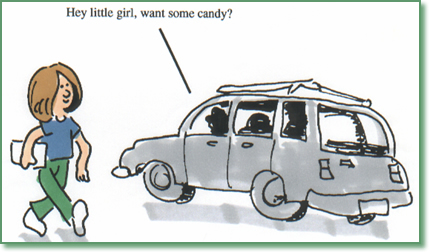
Don't talk to Strangers


POLICE believe that there are windows of opportunity for abduction to happen when children are at school.

"Some schools are pretty safe -- they have a guardhouse and the security guard is always at attention. We also understand that their gates are usually closed during school hours. But there are some that are probably not as careful," said Deputy Superintendent Norisah Ab Hamid, who heads the children's investigation unit under the sexual and children's investigation division, or D11.

Police are also concerned that children are left largely to their own devices once the school bell rings. It doesn't help that most children today are "very friendly".

"They talk to strangers freely. Parents should tell them not to talk to strangers. Teach them to say 'no'. Teach your child to shout for help if a stranger approaches or touches him or her," she said.

Young children, especially those under 15, are more vulnerable and should never be left alone, she added.

However, current statistics show that cases of missing children usually occur around the child's home.

Some examples would be the abduction of Nurin Jazlin Jazimin and Sharlinie Mohd Nasar.

Nurin, 8, was reported missing while on her way to the night market near her house in Wangsa Maju on Aug 20, 2007. Her naked body was later found stuffed into a sports bag and left in the stairwell of a shoplot in Petaling Jaya a month later.

Five-year-old Sharlinie was reported missing while playing outside her house in Taman Medan on Jan 9, 2008.

"From the reports we've received, it seems that such incidents are happening closer to home," Norisah said.

She said when it comes to the safety of children, everyone has a responsibility, not just the parents or teachers.

"Be a busybody. If you see a child playing somewhere all alone, ask the child to go home or notify the parents. Each of us can help prevent a crime."

National Parent-Teacher Association president Associate Professor Datuk Mohd Ali Hasan pointed out that the culture of safety and security in schools was still lacking.

"We need more stringent security measures, especially in preschools. Strangers can easily enter some schools and preschools," said Ali.

A case in point would be the hammer attack on three 6-year-old pupils in Muar, Johor, by a man wearing a crash helmet who had rushed into their kindergarten.

The pupils from Tadika Sinario were hit on the head and had to be rushed to the Sultanah Fatimah Specialist Hospital.

The man had reportedly jumped over the fence and kicked open the grille door of the kindergarten before attacking the pupils.

Ali suggested random spot checks be conducted by the Inspectorate of Schools to check on the safety measures of all schools.

"Our safety system is not adequate. Children can easily be abducted. There should also be safety drills and safety committees in all schools. The committees should present monthly reports at parent-teacher association meetings," said Ali.

2010/04/25
http://www.nst.com.my/Current_News/NST/articles/SECUCOL2/Article/index_html

Wednesday, April 21, 2010

What Children Can Teach Their Parents


Every parent has experienced the phenomena of their child begging for their favourite story to be read, their favourite song to be played or their favourite movie to be watched for the 100th time.

Even though we adults might be tempted to hide the favourite book or introduce a new book, CD, or DVD, we must stop ourselves because our children are actually teaching us a huge lesson about how they want and need to be parented.

When our children repeat a request for their favourite story to be read, it is because they have an innate interest in ‘mastery’. Of course they love to explore new toys, corners, books and movies, but once the all-important excitement of discovery has occurred, children set out to ‘master’ the things that interest them the most.

Mastery occurs through repetition. Young children are driven to discover and then master all aspects of their world.

Discipline is another area in which children innately crave mastery. Children test their parents because they are trying to figure out how their world works and what is acceptable behaviour. While they do their research they do things consciously and unconsciously to investigate their world and it’s limits so that they are able to ‘master’ it.

The best thing parents can do is to learn a simple methodology for discipline, get trained to use it and then apply it consistently. This will decrease the number of times their child needs to test and will diminish the intensity of the testing. Children whose parents often use different strategies, use bribes or threats become very confused and unsure of themselves. It is for this reason that many parenting experts say that discipline makes children feel safe and secure.

One can liken children’s feelings to the experience of hiking down a trail with very few trail signs or markers. It’s confusing! Without clear signals to keep one on course, one is more likely to make wrong turns and get into trouble. This is what it’s like for children as they try to learn the path of acceptable behaviour. When limits are unclear or inconsistent, children often steer off course and get into trouble, thus making mastery of acceptable behaviour very difficult and unsettling.

So, as you spend time with your child, remember what it is that they crave the most…mastery. Let’s be conscious of this and then make a decision to help them master their world with confidence and ease.

Image: Cuellar
http://www.lifehack.org/articles/lifestyle/what-children-can-teach-their-parents.html?utm_source=feedburner&utm_medium=email&utm_campaign=Feed:+LifeHack+(lifehack.org)

Monday, April 19, 2010

Nota terjun tingkat 11

KUALA LUMPUR: Tekanan perasaan dialami selepas mendakwa sering dimarahi keluarga kerana mendapat keputusan peperiksaan tidak memuaskan membuatkan seorang pelajar tingkatan tiga sanggup terjun daripada tingkat 11 pangsapuri didiami.

Sebelum terjun, pelajar perempuan itu sempat menulis surat meluahkan perasaan kecewanya kerana kerap dimarahi ibu bapa apabila gagal mencapai kejayaan cemerlang dalam peperiksaan.

Malah, dia juga turut merakamkan gambar sendiri menggunakan telefon bimbit yang menunjukkan seolah-olah cuba menjerut leher menggunakan rantai yang dipakainya.

Sumber polis berkata, dalam kejadian jam 5 pagi itu, remaja berkenaan dipercayai bertindak terjun dari tingkap bilik tidurnya selepas meninggalkan surat dan bukti berhubung masalah dialami.

Menurutnya, pelajar yang tinggal bersama ahli keluarga di Ketumbar Height, Cheras di sini, cedera parah di kepala dan tubuh kesan dari hentakan kuat menyebabkan dia mati di lokasi kejadian sebelum mayatnya ditemui penduduk pangsapuri itu.

“Berdasarkan siasatan, mangsa kerap menginap di rumah mak ciknya di tingkat empat di pangsapuri sama, namun pada hari kejadian, mangsa dikatakan pulang ke rumahnya di tingkat 11 kediaman itu.

“Sebelum terjun, mangsa sempat menggunakan telefon bimbit kamera miliknya untuk merakam perbuatan anehnya. Berdasarkan siasatan, dia dilihat sengaja menggunakan rantai leher sambil seolah-olah cuba menjerut lehernya sendiri,” katanya.

Menurutnya, pelajar itu kemudian menulis di atas dua keping kertas mencurahkan segala masalah dan rasa isi hatinya. Antaranya mendakwa tertekan dengan keputusan akademiknya yang mengecewakan menyebabkan dia kerap dimarah oleh ibu bapa.

“Mangsa mendakwa tertekan dengan tindakan ibu bapanya yang kerap meluahkan rasa tidak puas hati sehingga dia mengambil keputusan untuk membunuh diri bagi menghentikan penderitaan dialami,” katanya.

Menurutnya, mayat remaja itu dihantar ke Pusat perubatan Hospital Kebangsaan Malaysian (PPUKM) untuk bedah siasat.

“Setakat ini siasatan mendapati kematian mangsa tidak membabitkan unsur jenayah dan ia adalah kes mati mengejut,” katanya.

Bagaimanapun, keluarga mangsa yang diambil keterangan polis tidak percaya mangsa sanggup membunuh diri hanya kerana tertekan dengan keputusan peperiksaan diperoleh.

Bapa mangsa berusia 49, mendakwa dia dan isteri tidak pernah memarahi anak gadis mereka atau memberi tekanan kepadanya.

Difahamkan, bapa mangsa meminta polis menyiasat punca kes kematian mangsa lebih terperinci bagi mengenal pasti motif sebenar di sebalik kematian anak gadisnya itu.

Oleh Mohd Jamilul Anbia Md Denin
anbia@hmetro.com.my
2010/04/19
http://www.hmetro.com.my/myMetro/articles/Notaterjuntingkat11/Article

Sunday, April 18, 2010

MARA sponsors more than 62,000 students this year

KUALA LUMPUR: The Majlis Amanah Rakyat (MARA) has sponsored more than 62,620 students to pursue studies in various fields, including 6,831 in learning institutions overseas.

Deputy Rural and Regional Development Minister Datuk Joseph Entulu Belaun said MARA had two sponsorship schemes for local and overseas studies, namely the outstanding student scheme and the open financing scheme.

"The condition or pre-requisite for students going overseas under the outstanding student scheme is to obtain excellent result in Sijil Pelajaran Malaysia (SPM), participation in co-curriculum activities and to pass the interview.

"MARA will also evaluate in terms of the socio-economic status of the applicant's family," he said when winding-up the debate on the Supplementary Supply Bill (2010) 2010 in the Dewan Rakyat today.

He said sponsorship by MARA focused on critical areas like medicine, engineering, biotechnology, sanctuary science, accounts, management and administration and architecture.

On the delay in payment of the cost of living allowance for overseas students, he said, it happened because of the delay by students in submitting the necessary documents, including account books, to the MARA office.
"For overseas students, MARA will pay them in advance the cost of living allowance for six months, including for clothing, to help them prepare for a new life in a foreign land.

"To facilitate this, students are required to open a bank account in the country there are in and to submit a copy of the account book and some other documents to the MARA office for purpose of crediting the allowance," he added. - Bernama

Friday, April 9, 2010

Keputusan ke matrikulasi diketahui Jumaat depan

PUTRAJAYA 9 April – Pelajar lepasan Sijil Pelajaran Malaysia (SPM) yang telah membuat permohonan untuk mengikuti program matrikulasi, boleh mengetahui keputusan permohonan mereka mulai 16 April ini.

Menurut kenyataan Kementerian Pelajaran di sini hari ini, semakan boleh dibuat dengan melayari laman web http://www.moe.gov.my dan memasukkan nombor kad pengenalan serta angka giliran SPM pemohon.

Semakan juga boleh dibuat dengan menghantar khidmat pesanan ringkas (SMS) dengan menaip perkataan MOEMATNO KP (pelajar) dan hantar ke talian 15888.

Talian bantuan Bahagian Matrikulasi iaitu 03-88844100 juga boleh dihubungi mulai tarikh yang sama dari pukul 8.30 pagi hingga 4 petang (hari bekerja sahaja) untuk mengetahui keputusan permohonan tersebut.

Tarikh pendaftaran pelajar matrikulasi ialah pada 10 Mei dan surat tawaran serta maklumat lanjut tentang pendaftaran, yuran dan sebagainya akan dihantar oleh kolej matrikulasi atau kolej Mara berkenaan.

Kenyataan itu juga menyebut, pelajar yang layak dan telah memohon, tetapi gagal mendapat tempat boleh membuat rayuan terus melalui internet mulai 16 hingga 30 April.

Keputusan rayuan boleh diketahui pada 24 Mei melalui laman web, SMS serta talian bantuan Bahagian Matrikulasi. – Bernama